

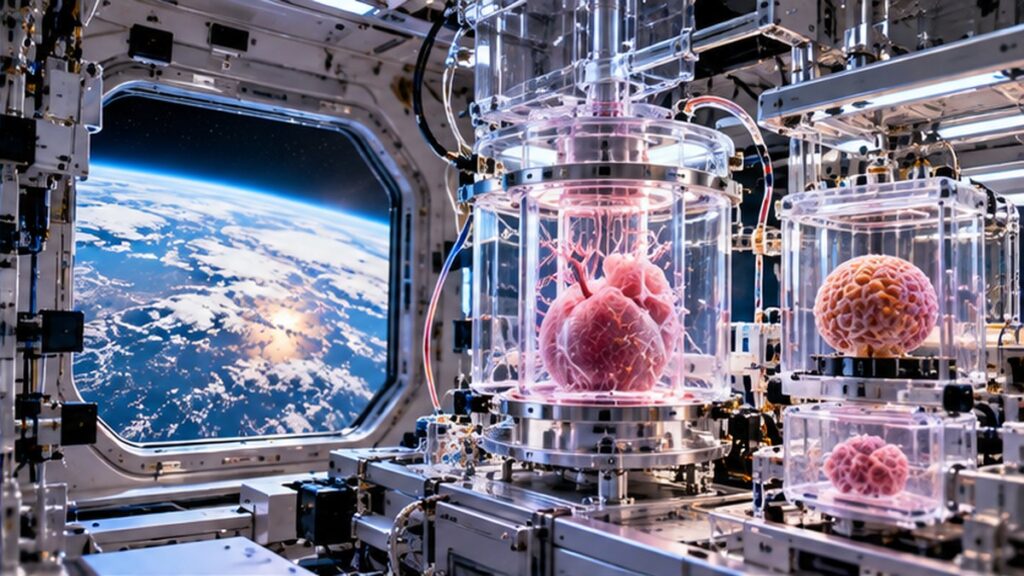
The value of microgravity research is becoming increasingly visible in regenerative medicine, where biological structures and processes can be difficult to study under terrestrial conditions.
NASA’s SpaceX CRS-35 cargo mission launched on October 13 carrying more than two dozen investigations sponsored by the International Space Station National Laboratory. Several focus on sophisticated human tissue models and disease research.
Cedars-Sinai researchers are studying vascularized cardiac spheroids derived from human stem cells. Introducing blood-vessel networks into engineered tissue could improve experimental models of cardiovascular disease and drug-induced cardiac toxicity.
The Wake Forest Institute for Regenerative Medicine is using patient-derived colorectal cancer organoids to examine chemotherapy responses and potential therapeutic targets. The National Stem Cell Foundation is studying human neural organoids to investigate neuroinflammation associated with neurodegenerative diseases.
These projects are experiments rather than validated orbital manufacturing businesses. Their scientific results must establish whether microgravity produces information or biological properties that justify the expense and logistical complexity of sending research to space.
Nevertheless, the missions illuminate an emerging relationship between two industries. Regenerative medicine needs reliable tissue models, automated experimentation, sample handling, reproducible biological processes, and ultimately manufacturing and clinical translation. Commercial space providers need customers able to derive measurable benefits from orbital conditions.
Potential service markets include automated orbital laboratories, bioreactor systems, cold-chain handling, launch integration, sample return, analysis, and quality systems. Their economics will depend on repeatability and demonstrable advantages over terrestrial alternatives.
Gravonomy takeaway
Regenerative medicine could become a durable customer for orbital research infrastructure if the scientific advantages of microgravity can be translated into repeatable, economically defensible services. Universities, biotechnology groups, and space companies may find useful opportunities at the interfaces between biology, automation, logistics, and manufacturing.