

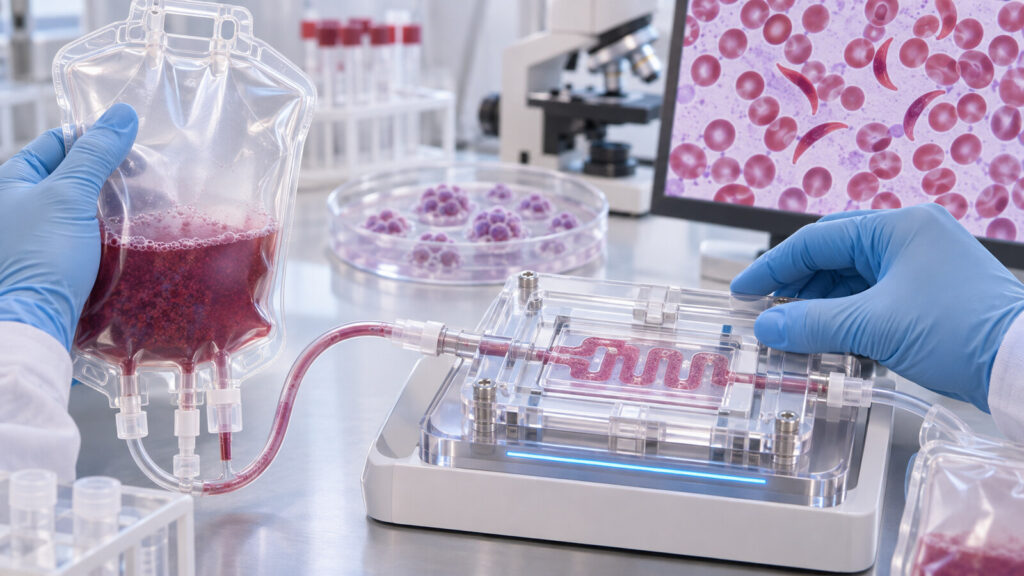
Beam Therapeutics announced positive topline results on November 10 from its BEACON Phase 1/2 study of risto-cel, an investigational autologous base-edited stem-cell therapy for sickle cell disease. Risto-cel is designed to increase anti-sickling fetal hemoglobin by editing regulatory regions of the HBG1 and HBG2 genes.
At the October 20 data cutoff, 49 patients had received treatment and 31 had sufficient follow-up for the 12-month primary endpoint. Beam reported that the prespecified interim analysis met the primary efficacy and safety endpoints, including sustained freedom from severe vaso-occlusive crises. A planned U.S. biologics license application could be submitted as early as year-end 2026.
These are company-reported topline results; final data and regulatory review could change the outcome. The treatment remains investigational and is not approved. Nevertheless, the result moves base editing closer to a test of whether a complex therapeutic platform can translate into an approved commercial product.
For universities, therapeutic developers, and service suppliers, differentiation now encompasses clinical evidence, manufacturing reliability, treatment-center capacity, reimbursement, and commercialization execution as much as editing precision.
Gravonomy takeaway
As gene-editing platforms approach regulatory decisions, the major market questions shift toward delivery economics, infrastructure, and health-system adoption. Translational partnerships should address these requirements before pivotal development is complete.